
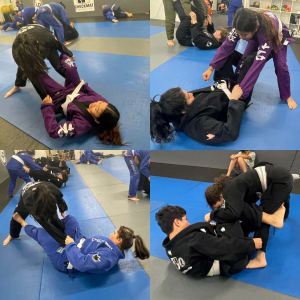
Why is Creating Imbalance important in BJJ?
Creating imbalance (often called kuzushi) is one of the most fundamental principles in Brazilian Jiu-Jitsu (BJJ). It’s essential because it makes everything else—sweeps, takedowns, guard passes, and submissions—much easier and more effective.
Here’s why it matters so much:
🧠 1. Breaks Your Opponent’s Stability
A balanced opponent is strong and hard to move. When you disrupt their base:
- Their weight distribution becomes uneven
- They lose the ability to defend effectively
- Their movements become slower and predictable
👉 Think of it like trying to push someone standing firmly vs. someone leaning—imbalance makes them easier to control.
⚙️ 2. Creates Openings for Attacks
Most techniques in BJJ don’t work on someone who is stable and resisting.
Creating imbalance:
- Forces reactions (posting a hand, stepping out, stiffening up)
- Exposes limbs or gaps
- Opens paths to submissions or sweeps
Example:
- You pull someone forward → they post their hand → you attack an armbar or sweep
🔄 3. Generates Momentum
Instead of using brute strength, you use motion:
- Pull → push → redirect
- Use their movement against them
This is why smaller practitioners can handle larger opponents—because they rely on timing and imbalance rather than force.
🥋 4. Essential for Sweeps and Reversals
Almost every successful sweep starts with off-balancing your opponent.
Key idea:
- You don’t lift someone—you tip them
Examples:
- Scissor sweep → requires breaking posture and shifting weight forward
- Hip bump sweep → works when opponent leans back or posts
🧩 5. Makes Guard Passing Easier (Top Player)
When you’re on top:
- If your opponent is balanced, their guard is strong
- If you shift their hips or shoulders off-center, their guard weakens
Example:
- Forcing knees together or turning hips sideways breaks their structure
🧘 6. Saves Energy
Instead of forcing techniques:
- You wait for or create imbalance
- Then apply technique when resistance is weakest
This is a core principle of efficiency in BJJ.
🔑 7. Connects All Phases of BJJ
Imbalance isn’t just for one area—it applies everywhere:
- Standing: off-balancing for takedowns
- Guard: setting up sweeps and submissions
- Top control: maintaining dominance
- Transitions: advancing position
✅ Simple Way to Think About It
Before any move, ask:
“Is my opponent balanced or not?”
If they’re balanced → create imbalance first
If they’re already off-balance → attack immediately
🔥 Quick Practical Tip
There are 4 main directions to off-balance someone:
- Forward
- Backward
- Side-to-side
- Rotational (twisting)
Great BJJ players constantly combine these directions.
🏁 Bottom Line
Creating imbalance is important in BJJ because it:
- Neutralizes strength
- Opens opportunities
- Makes techniques work with less effort
👉 In short: No kuzushi = low success rate. Kuzushi = high efficiency and control.